
The International Baccalaureate Programme (IB) aims to inspire young learners to investigate across and beyond the curriculum while taking action in the lifelong and fascinating journey of learning. Exploring through inquiry and personal experiences we aim to strengthen the knowledge and deepen the understanding of our students as they engage with global, topical, and “big picture” questions. Through concept-driven, transdisciplinary learning, our curriculum places emphasis on developing knowledge, skills, attitudes and action in a holistic way.
What all IB Programmes Share
The IB Learner Profile
At the heart of the IB is the Learner Profile: a set of attributes that guide students in becoming balanced, principled and open-minded individuals. Students are supported to grow as inquirers, thinkers and communicators, while also developing the dispositions of being caring, reflective, knowledgeable, risk-takers and internationally minded.
Approaches to Learning (ATL) Skills
IB students also build “learning how to learn” skills that transfer across subjects and help them succeed in school and beyond. These include:
- Communication skills (expressing ideas clearly and confidently)
- Social skills (collaboration, empathy, teamwork)
- Self-management skills (organisation, time management, wellbeing and resilience)
- Research skills (finding, evaluating and using information responsibly)
- Thinking skills (creative and critical thinking skills, analysis, creativity, problem-solving and reflection)
”The International Baccalaureate Programme (IB) cultivates learners who question, explore, and act, building knowledge and understanding that extend far beyond the classroom.”

IB primary years programme (IB PYP)
The Primary Years Programme (PYP) offers students a dynamic and engaging learning experience where inquiry, content-based and experiential learning reinforce transdisciplinary skills across subject areas. Our PYP subjects include:
- Greek and English (Main languages)
- Spanish, German or French (Secondary language)
- Social Studies
- Mathematics
- Science
- STEM
- Coding
- Music
- Visual Arts
- Yoga
- Philosophy
- Personal, Social and Physical Education (PSPE)
Within this framework, children explore ideas through meaningful connections, guided by transdisciplinary themes that link their learning to the wider world. This approach fosters curiosity, creativity, independence, and social-emotional growth while encouraging multiple languages and valuing each child’s unique identity.

Project-based learning
Projects are an important part of the PYP experience. Students work individually and collaboratively to investigate questions, design solutions, create products and share learning with authentic audiences. Through this process they get the chance to build their confidence, independence and real-world skills.
Differentiation and Inclusive Learning in the PYP
In the Primary Years Programme, teaching and learning are designed to meet the needs of every child. Teachers carefully plan learning experiences that are differentiated according to students’ readiness, interests and learning profiles. This means that children may engage with the same concepts in different ways, at different levels of challenge, and using a variety of strategies and resources.
Differentiation in the our school ensures that all learners are appropriately supported and challenged, allowing them to progress confidently while developing independence, resilience and a love of learning.
Language Development and Support
Language is central to learning in the PYP, and we place strong emphasis on supporting students’ linguistic development in both their home language and additional languages.
Greek as an Additional Language (GAL)
Students who are developing their proficiency in Greek receive targeted support through Greek as an Additional Language (GAL) classes. These sessions help students build confidence in speaking, listening, reading and writing, enabling them to fully participate in classroom learning and school life.
English Remedial Support (ERS)
For students who require additional assistance in English, English remedial support is provided. These sessions focus on strengthening literacy skills, vocabulary development and comprehension, ensuring students can access the curriculum successfully across subject areas.
Assessment and Reporting (PYP)
Assessment in the PYP is continuous, meaningful and engaging, helping teachers plan next steps and supporting each child’s progress over time. We use:
- Pre-assessment: identifies students’ prior knowledge, skills and understanding at the start of a unit to inform planning and differentiation.
- Formative assessment: happens throughout learning through teacher observations, discussions, reflections and learning tasks, with timely feedback to move learning forward.
- Summative assessment: at the end of a unit, students demonstrate what they have learned through authentic tasks, projects or presentations.
Reporting: Parents receive IB PYP report cards at the end of the school year, providing a clear overview of progress, skills development and student’s growth.
IB Middle Years Programme (IB MYP)
The Middle Years Programme (MYP) is designed for students aged 11 to 16 and supports them through a key stage of academic, social and personal development. The MYP helps students become curious, capable and reflective learners by combining strong subject knowledge with real-world relevance.
Students learn to make connections between disciplines, think critically about information, and communicate their ideas effectively. Just as importantly, they build the habits and strategies that allow them to take increasing responsibility for their learning and develop the skills that prepare them for further study and life beyond school.
MYP Subject Groups
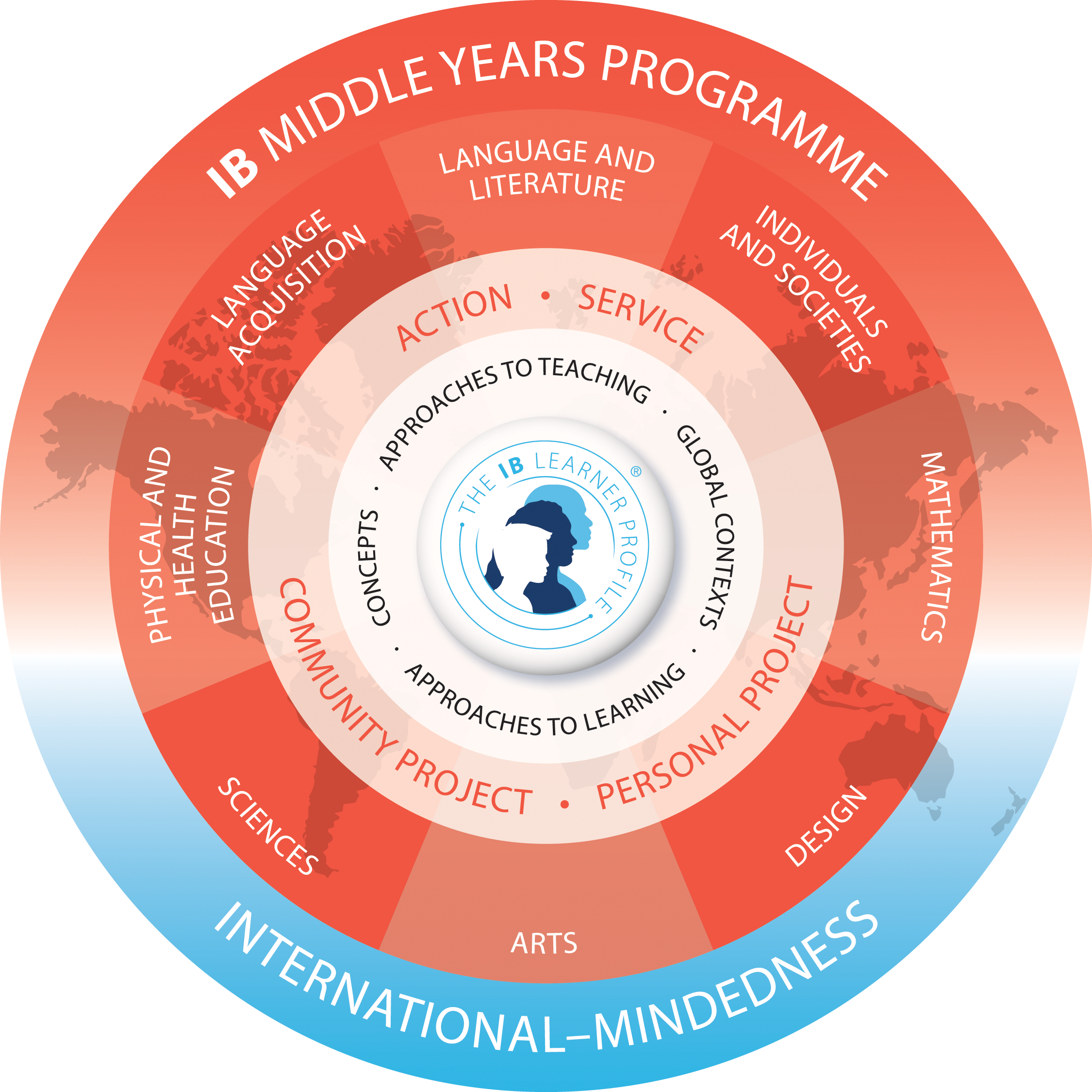
The MYP curriculum includes eight subject groups:
- Language and Literature (Greek and English)
- Language Acquisition (Spanish, French, German)
- Individuals and Societies
- Mathematics
- Sciences (Physics, Chemistry, Biology)
- Arts (Visual and Performing)
- Physical and Health Education
- Design (Digital and Product design)
What makes the MYP different
- Concept-driven learning: Teaching is built around “big ideas” that deepen understanding and help students apply learning in new situations.
- Global contexts: Units are framed through real-world contexts that develop international mindedness, intercultural understanding and global engagement.
- ATL skills in action: Students explicitly practise skills for research, collaboration, communication, organisation and higher-order thinking.
- Interdisciplinary learning: Students connect knowledge and skills across subjects to develop a more coherent understanding of the world.
Service as Action (SA)
Service as Action is a core component of the MYP and encourages students to apply their learning beyond the classroom. Through meaningful service experiences, students develop a sense of responsibility, empathy and active citizenship. Students engage in individual and collaborative activities that respond to real needs within the school and wider community, helping them grow as reflective, caring and internationally minded learners.
The Personal Project (Grade 10)
The Personal Project is a culminating experience in the final year of the MYP. Students independently explore a topic of personal interest, setting a clear goal and creating a product or outcome that demonstrates their learning. Throughout the process, students apply their Approaches to Learning (ATL) skills, including research, planning, self-management and reflection. The Personal Project encourages creativity, independence and perseverance, and prepares students for future academic challenges.
Assessment and Reporting (MYP)
Assessment in the MYP is criterion-related and standards-based, following IB guidelines. Each subject uses a set of specific assessment criteria, which are shared with students in advance. Student work is assessed using IB rubrics, allowing learners to understand expectations and reflect on their progress.
- Each subject has four assessment criteria, which differ according to the discipline.
- Achievement levels are awarded for each criterion and combined to produce a final grade from 1 to 7, in line with IB standards.
- Assessment focuses on both the learning process and demonstrated understanding, supporting continuous improvement.
Reporting: Parents receive IB MYP report cards twice per year (at the end of each term), providing clear information about achievement levels, final grades and progress across subject areas.
IB Diploma Programme
Preparing students for university, life and a changing world
The International Baccalaureate® Diploma Programme (IBDP) is an academically challenging and balanced programme of education for students aged 16–19. It is an assessed programme designed to develop students with breadth and depth of knowledge, strong academic foundations, multilingual abilities and the capacity to flourish intellectually, physically, emotionally and ethically.
At the Interactive European School, we believe that the IBDP can provide students with an internationally oriented education that challenges them to think critically, inquire independently and engage meaningfully with the world around them.
The IBDP is respected by leading universities around the world and offers students a strong preparation for higher education and life beyond school. (International Baccalaureate)
1. The IBDP: What is the Diploma Programme?
The IBDP is a two-year programme for students aged 16–19 that combines academic depth with breadth of learning. Students study a range of subjects while developing skills and perspectives that extend beyond individual disciplines.
The programme aims to develop knowledgeable and capable young people who can engage confidently with complex ideas, understand different perspectives and become thoughtful, responsible members of an increasingly interconnected world.
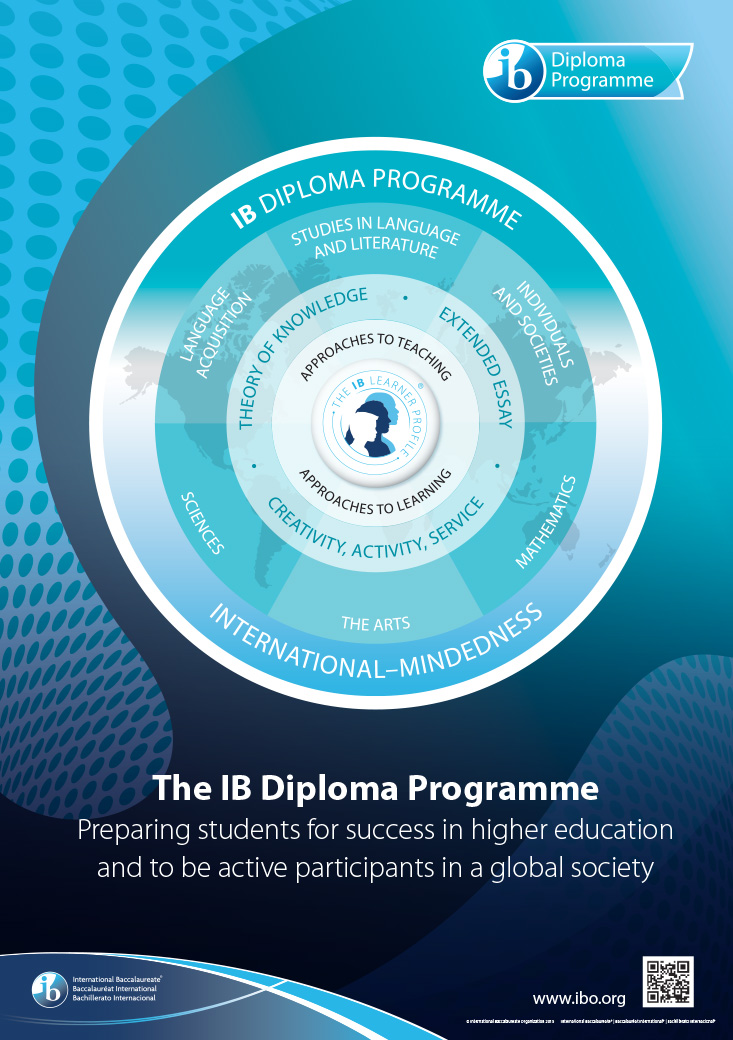
A distinctive feature of the IBDP is its core, which complements students’ academic studies through:
- Theory of Knowledge (TOK): encouraging students to reflect on the nature of knowledge and how we know what we claim to know.
- The Extended Essay (EE): an independent research project that allows students to investigate a question of personal academic interest.
- Creativity, Activity, Service (CAS): experiences through creativity, physical activity and voluntary service that encourage personal and interpersonal development.
Together, these elements provide an educational experience that goes beyond examination preparation and encourages students to become independent thinkers and learners. (International Baccalaureate)
2. The DP Curriculum
The IBDP curriculum is built around six subject groups and the DP core. Students normally select one subject from each of the six groups, with the option of taking an additional subject from another group instead of a subject from the arts.
The six groups are:
- Studies in Language and Literature
- Language Acquisition
- Individuals and Societies
- Sciences
- Mathematics
- The Arts
Students take a combination of Higher Level (HL) and Standard Level (SL) subjects. Each student takes a minimum of three and a maximum of four subjects at Higher Level, with the remaining subjects taken at Standard Level. HL courses comprise 240 recommended teaching hours, while SL courses comprise 150 recommended teaching hours.
The curriculum is designed to provide both breadth and depth: students explore different academic disciplines while developing a deeper level of knowledge and understanding in their chosen Higher Level subjects. (International Baccalaureate)
Alongside their subjects, all full Diploma Programme students complete the three components of the DP core: TOK, the Extended Essay and CAS. (International Baccalaureate)
3. From the IBDP to University and Employment
The IBDP provides a strong pathway towards higher education. The IB Diploma is recognized and respected by leading universities worldwide, and DP students apply to more than 5,000 higher education institutions in over 100 countries each year.
University admission remains dependent on the requirements of each individual institution, country and programme, as well as the student’s academic performance. Families are therefore encouraged to check the specific admission and recognition requirements of universities they are considering.
The skills developed through the DP also extend beyond university. Its broad and rigorous academic curriculum, together with opportunities such as CAS, can help students develop knowledge, independence, communication, research and other skills that are valuable in further study and employment. (International Baccalaureate)
The IBDP is therefore not simply a qualification for university entry. It is an educational experience designed to prepare students for continued learning and for life beyond school.
Entry to the IBDP Department at Interactive European School
Admission to the IBDP Department at the Interactive European School will be based on the school’s entry requirements and the student’s readiness to undertake the demands of the programme.
To be considered for entry, students must:
- successfully complete the first year of High School;
- pass the Mathematics entrance assessment;
- pass the Greek entrance assessment; and
- demonstrate C1-level English proficiency.
These are Interactive European School entry requirements and should not be understood as requirements established by the International Baccalaureate Organization itself.
The admissions process is designed to ensure that students entering the IBDP have the academic foundations, language proficiency and preparation needed to engage successfully with a demanding two-year programme.
Why Choose the Interactive European School for the IBDP?
Joining a new IBDP community offers families the opportunity to become part of a programme from its early development and to contribute to a strong, collaborative school culture.
At the Interactive European School, our ambition is to build an IBDP environment that combines academic challenge with close student support, an international outlook and a strong sense of community. Drawing on characteristics valued by established IBDP schools, including appropriately challenging learning, a broad range of subject opportunities, supportive faculty, university guidance, extracurricular experiences and attention to student wellbeing we aim to create an environment in which every student can develop academically and personally.
Join the Beginning of Something New
The Interactive European School is developing its IBDP provision with the ambition of creating a rigorous, internationally minded and student-centred learning environment in Athens.
For families seeking an internationally recognized educational pathway and a community in which students can be challenged, supported and encouraged to become independent thinkers, the IBDP offers a distinctive opportunity.
Interactive European School is building the foundations of a new IBDP community in Athens.
DES is a Candidate School* for the Diploma Programme. This school is pursuing authorization as an IB World School. These are schools that share a common philosophy—a commitment to high quality, challenging, international education that DES believes is important for our students.
*Only schools authorized by the IB Organization can offer any of its four academic programmes: the Primary Years Programme (PYP), the Middle Years Programme (MYP), the Diploma Programme, or the Career-related Programme (CP). Candidate status gives no guarantee that authorization will be granted. For further information about the IB and its programmes, visit www.ibo.org